
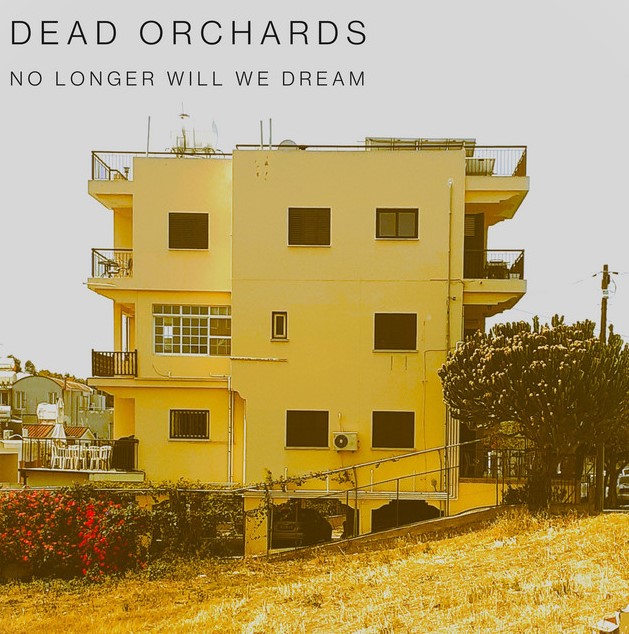
Sometimes pure and simple introspection’s all you need. A simple tangible thought and a mood paired precisely with just enough texture and sound to support the intent of an idea. It’s an uncluttered recipe, free of garnish, free of frills, free of dressing. Free of anything that’s distracting from delivery. And that’s exactly what Dead Orchards produce, in an album entirely free of complication.
If you get hints of gothic emo from its title, ignore it now and ignore it completely. This is bedroom DIY as-close-to-feel as you can get with every unpolished nook and cranny bare and open. There’s no production of the year awards, but that don’t mean it goes uncared for. There’s no Nobel-prize for lyricism, but each word’s simplicity wins over. This is an album on its sleeve with its very best ideas unrealised, and with its worst ideas beguiling at very least. To breathe it in is to share a breath and sense of purpose; a writer writes, an artist makes, and this case, two musicians, they create.
Position yourself someplace between early Smog and Velvet Underground and you’ll get a hint of this gone type of honest want. Place yourself somewhere in the middle of Bob Geldof’s ‘Pale White Girls’ and an unfiltered and unfussy 90s MIDI Arab Strap, and you’ll be arriving at our hook and presentation. If those comparisons seem lazy, so be it. But it’s my job to place and pinpoint all those awkward points in time when the underdog with heart and soul wins over.
‘Over You’ is a jangle of warm synths and strummed guitars with the title’s loss writ large and out of sight. ‘Parallel Paths’ is where the same glow of synth pads meets piano in a refrain that only seeks to serve the mood. There’s a penny making alchemy when the keys move with the vocals, and once again all and any fumble is forgiven. ‘The Last Call’ carries with it the very purest form of post punk where it’s a single note run that gives the muscle. In space no one can hear you scream, Alien says so, but in the space left in a song we find its soul.
And every one of these private moments is repeated; in every song, in every movement, every step. To listen to one song is to almost hear them all. But to skip any of the album would be intolerable. All those threads of gentle sadness, all those textures of percussion, all the constants of piano and guitar, synth and subtle reverb vocals, they make a chain that lasts an album that be might be tough to like on contact but with patience, grabs the chest with every flaw. We don’t always get to hear the mind of the creator. And this is that mind with little or nothing more.
Now go and listen to Clinic’s ‘Distortions’ and tell then me ‘Over You’ doesn’t stack up to it.
 Rats on the Run